
Cutting efficiency is central to wire EDM cost control — more output, faster, better and cheaper is every shop’s goal. Raising it means knowing both the normal productivity of each machine class and the factors that limit it.
1. Efficiency Benchmarks by Machine Class
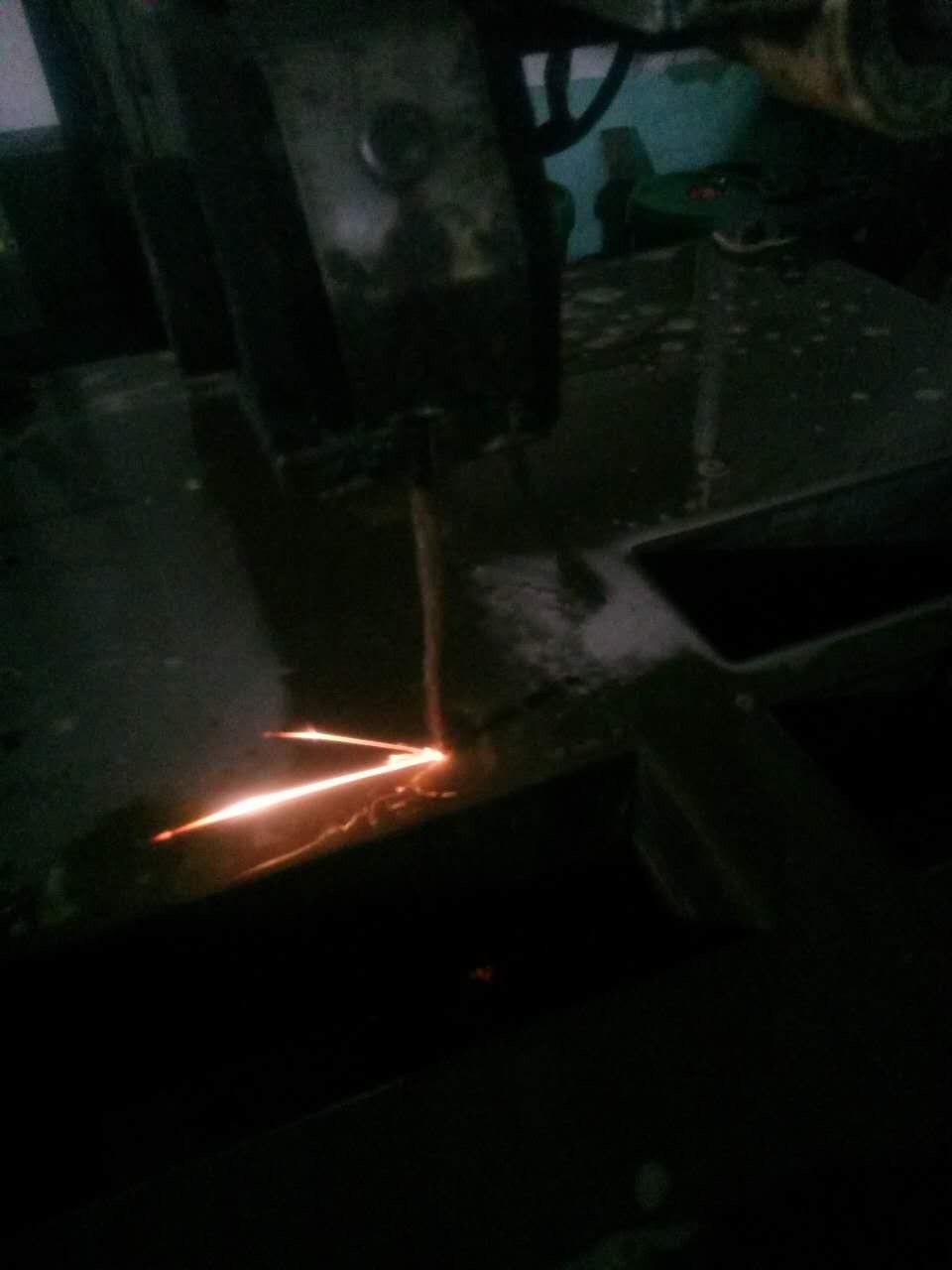
- HS-WEDM: wire speed 6–12m/s, fast reciprocating wire, lower accuracy
- MS-WEDM: variable-frequency multi-pass cutting built on HS-WEDM, a newer process
- LS-WEDM: wire speed about 0.2m/s, one-way slow wire, high accuracy
Cutting typical die steel under 100mm thick at 5–6A:
| Machine | Single-pass rate | Combined rate |
|---|---|---|
| HS-WEDM | 6000–15000 mm²/h | — |
| MS-WEDM | 6000–10000 mm²/h | 2000–4200 mm²/h (three passes) |
| LS-WEDM | 5000–7000 mm²/h | about 3000 mm²/h (three passes) |
2. Hardware Causes of Slowdown
Electrical faults. Control cabinets with poor-quality components, bad design or messy wiring develop short circuits, poor contacts and component aging; efficiency then drops sharply over time.
Deteriorating insulation. Wire EDM works by instantaneous discharge between positive and negative electrodes, so machine insulation must stay sound. Three critical areas:
- The worktable riser: insulated with bakelite or rubber in the middle; dirt buildup over time degrades insulation and discharge efficiency
- The conductive block: its rubber seat insulates the wire from the machine; a dirty block loses insulation and can even short-circuit
- The wire spool (reel): insulated from the machine by bakelite; heavy dirt on the spool weakens insulation and cuts efficiency
Aged wiring. Oxidized high-frequency lines and connectors hinder power transmission and slow discharge.
3. The Physical Limit: Wire Current Capacity
Molybdenum wire current capacity is the hard constraint on cutting speed. Tests show that at 150A/mm², tensile strength falls to one third to one quarter of its original value; this current is treated as the cutting limit (about 1.74A for Ø0.12, 2.65A for Ø0.15, 3.82A for Ø0.18). Beyond it, wire life becomes very short.
Thicker wire raises current capacity and speed, but HS-WEDM does not allow wire above 0.23mm (winding, deflection and wear reasons). When average current reaches 8A, the gap shows short circuits or arcing and wire wear jumps. Simply “bigger wire, more current” is not the answer.

4. Seven Practical Measures
- Raise single-pulse energy — increase pulse amplitude and peak current; widen the pulse interval accordingly so the average current and wire load do not rise too much
- Keep the dielectric in condition — maintain its dielectric constant and insulating strength, spark force and cleaning ability, so eroded debris shorts out the pulse as little as possible
- Improve wire feeding mechanics — a narrow slot cuts faster than a wide one, a straight cut faster than a zigzag
- Raise wire speed moderately — more water is dragged into the slot and debris flushed out more effectively
- Enhance water envelopment — water accelerated by the wire cleans the gap better
- Improve variable-frequency tracking — higher pulse utilization
- Shorten reversal time — a faster-accelerating spool motor adds productive cutting time
With these measures, 100–120mm²/min is achievable; going higher means sacrificing reliability and continuous running time.
The efficient path is “know the limit, fix the cause”: keep insulation and wiring healthy, and optimize single-pulse energy, fluid, wire feeding and tracking — combined, they raise cutting speed safely and stably.
Need more information? — we reply within 24 hours. Contact our sales team