
Wire EDM fluid and ordinary cutting fluid sound similar but are fundamentally different in composition and performance. Understanding the difference helps operators choose correctly and avoid machining problems caused by the wrong fluid.
1. Composition: the Key Difference
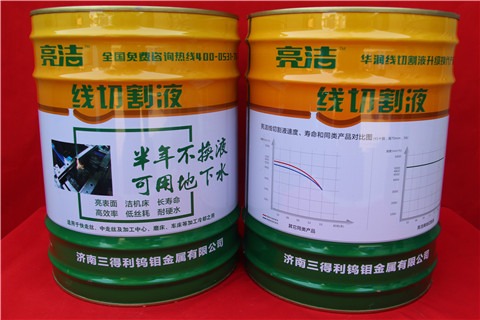
Wire EDM fluid contains a necessary additive commonly called the “explosion agent,” whose job is to promote discharge. Conventional cutting fluid does not contain it. This is why most wire EDM fluids, especially oil-based ones, are classified as flammable or dangerous goods and cannot be shipped by sea or rail.
2. Different Performance Requirements
- Wire EDM fluid: dielectric performance is the core requirement. Adequate dielectric strength while still allowing discharge reduces energy loss during breakdown of the medium, and good wetting, cleaning and flushing are also required.
- Conventional cutting fluid: provides only cooling, lubrication and rust prevention; there is no discharge-medium requirement.
3. Application Boundaries
Wire EDM fluid can also be used for simple turning, milling and grinding jobs. The reverse is not true — conventional cutting fluid lacks the discharge-promoting additive and cannot support EDM.
4. Composition of Wire EDM Fluid
Wire EDM fluid (also called wire EDM coolant or working fluid) is used mainly on NC wire-cut machines, typically HS-WEDM. By composition there are three types:
- Pure oil: mineral oil and oil-soluble additives, used without dilution; examples include extreme-pressure cutting oil and EDM oil.
- Emulsion (saponified fluid): an early product, containing mineral oil (at least 60%), emulsifiers and necessary additives, diluted to a 5% suspension; examples include rust-preventive soluble oil and water-based paste concentrate.
- Water-based synthetic: a water-based formulation with cleaning agents, the discharge-promoting additive and rust inhibitors, used at a 1:10–20 dilution; contains no mineral oil or nitrites. It is environmentally friendly and increasingly the mainstream choice.
Mixing note. For emulsion, pour the soluble oil in first, then add ordinary tap water in one pass while stirring (avoid hard well water). In cold northern winters, mix with warm water at 10–15°C, then dilute with tap water.
Summary. Choosing the right fluid is a prerequisite for machining quality. Wire EDM requires a dedicated fluid with the discharge-promoting additive and adequate dielectric performance; conventional cutting fluid cannot substitute. Water-based synthetic fluids are steadily becoming the market mainstream on the strength of environmental and longevity advantages.
Need more information? — we reply within 24 hours. Contact our sales team