
The perpendicularity of the two axes is the foundation of wire EDM machining accuracy. When the X/Y axes are out of square, the first step is to determine whether the problem lies in the guide rails or in lead screw interference, and then adjust accordingly.
1. The Basis of Perpendicularity
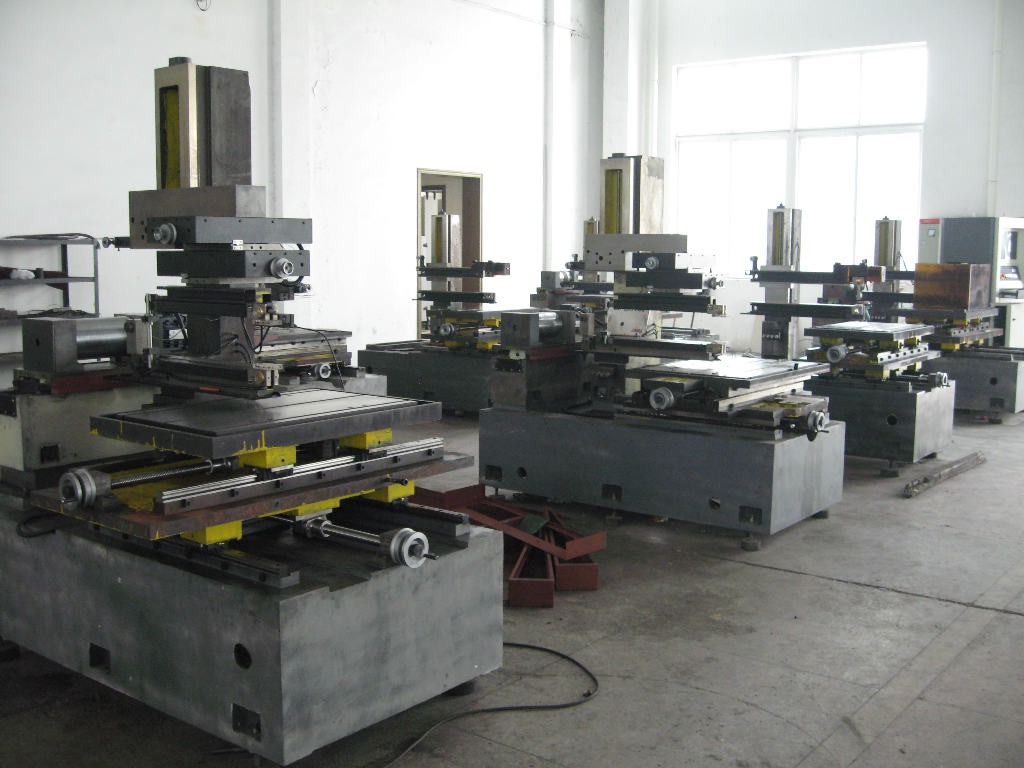
Two-axis perpendicularity is built on the straightness of each axis: straightness error shows up during perpendicularity measurement, and the values add together, making the perpendicularity reading unreliable. Therefore, ensure the straightness of each axis first, then the perpendicularity between the two axes.
2. Perpendicularity Depends on the Middle Table Guide Rails
Two-axis perpendicularity depends entirely on the perpendicularity of the two guide rail pairs on the middle table. During assembly, one rail pair is fixed to the datum, the other pair is measured and adjusted perpendicular to it, and then dowel pin holes are drilled to lock the perpendicularity of the two pairs.
Key principle: assembly and measurement should target one grade tighter than specified. If the initial installation uses up the full tolerance, accuracy drifts out of specification later. For example, if the machine accuracy standard is 0.02 mm, the internal control target for the first assembly should be below 0.012 mm.
3. Diagnosing Out-of-Tolerance Causes
The working condition of the lead screw also affects perpendicularity. Any external force at an angle to the rail locating face disturbs the rails (which are not locked rigidly). Once perpendicularity is out of tolerance, diagnose:
1. Rail deformation or misalignment Repeatedly loosen and re-tighten the lead screw and nut at several positions. If the direction and magnitude of the out-of-tolerance condition stay roughly stable, the guide rails themselves are the cause.
2. Lead screw motion interference If direction and magnitude lose regularity, the cause is interference between the lead screw and nut motion.
Warning: never blindly loosen rail fixings or pull out dowel pins — any operation performed without a diagnosis is pointless. Once the rail fixings are loosened and dowel pins removed, the entire first-time setup procedure must be repeated.
4. Prerequisites for Measurement and Adjustment
Any measurement and adjustment must be performed only after the rails move smoothly. If the rails jump or wobble irregularly, they are dirty or blocked by foreign matter; wipe them clean and lubricate before adjusting.
Summary: The core of correcting X/Y axis perpendicularity is “diagnose first, act second.” Confirm straightness, identify whether rails or lead screw are at fault, and make sure the rails move smoothly before adjusting; when necessary, re-calibrate following the first-time setup procedure.
Need more information? — we reply within 24 hours. Contact our sales team