
Machining allowance is a critical process parameter in wire EDM, directly affecting dimensional accuracy. The right method depends on the blank accuracy, the operation sequence and the conditions of the shop.
1. Three Common Methods

1. Table-correction method (most widely used). Industry handbooks collect blank and per-operation allowance data from production practice and tests. Look up the values, then correct them for the actual conditions of the shop.
Key points:
- Handbook values are nominal.
- Allowance on symmetrical surfaces (shafts, bores) is a double-sided allowance.
- Allowance on non-symmetrical surfaces is single-sided.
2. Empirical estimation. Based on practical experience. Estimates tend to be generous to avoid scrap from insufficient allowance, which wastes material. Suited to single-piece and small-batch production.
3. Analytical calculation. Uses allowance formulas and test data to calculate values. The most economical in principle, but it requires comprehensive, reliable test data and advanced computing, so it is rarely used today.
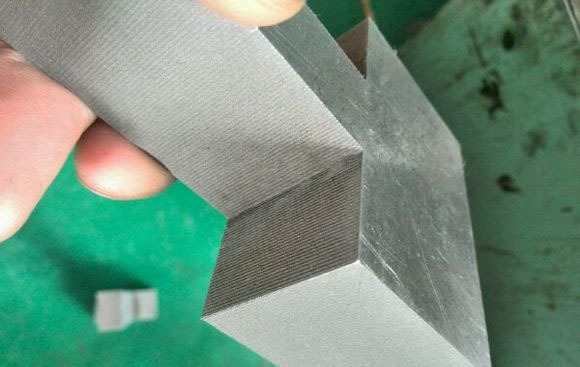
2. Total vs. Per-Operation Allowance
For medium-speed wire EDM (MS-WEDM), total allowance and per-operation allowance should be determined separately:
- Total allowance depends on the accuracy of the blank manufacturing method.
- Per-operation allowance: when using the table method, the roughing allowance should not be read directly from the table. Derive it by subtracting the allowances of the other operations from the total.
- Review the roughing allowance obtained: if too small, increase the total; if too large, reduce the total to avoid waste.
3. Practical Tips
- In batch production, prefer the table-correction method, adjusted for the actual blank and operations.
- For single pieces or small batches, combine empirical estimation and leave enough allowance to avoid scrap.
- For high-accuracy, high-value workpieces, analytical calculation can be used with multi-pass cutting to distribute allowance across passes.
- In multi-pass cutting, the second pass largely determines the dimensions and the final trim pass determines surface roughness; verify the allowance distribution for each pass in practice.
Summary: Correct allowance is the basis of wire EDM accuracy. Understanding the three methods, the single- vs. double-sided difference and how to split total allowance lets you choose the right allowance plan for each job.
Need more information? — we reply within 24 hours. Contact our sales team