
Molybdenum wire for wire EDM comes in diameters from 0.10 mm to 0.30 mm, and each size suits a different range of work. The right choice depends on the workpiece, its accuracy requirements, dimensions, machining allowance, gap and material.
1. Three Common Diameter Ranges

For HS-WEDM machines, molybdenum wire between 0.12 and 0.20 mm is standard. Three ranges cover most work:
0.10–0.14 mm (fine wire). For small workpieces, small allowances, high-cost materials and jobs demanding high accuracy (0.08 mm ultra-fine wire also exists). Fine wire gives higher accuracy and a narrower kerf, but tensile strength is low, it breaks easily, flushing of discharge products is poor, and stability is hard to guarantee.
0.16–0.20 mm (standard wire). The most common choice for routine cutting; 0.18 mm is the default. Multi-pass (finish-cut) work requires 0.18–0.20 mm wire — anything finer or coarser compromises finish-cut quality.
0.22–0.30 mm (coarse wire). For cut-off work, large workpieces, long continuous runs, low-requirement jobs, and materials like aluminum profiles that wear wire quickly. Coarse wire offers a wider kerf, easy flushing and stable cutting, but it struggles with sharp internal corners, reduces accuracy, and an over-wide kerf slows cutting.
2. How Diameter Affects Results
- Speed: at equal pulse settings, a larger wire removes more material per unit time and flushes better, but the wider kerf limits the gain. Fine wire improves accuracy but speed is hard to raise.
- Accuracy: fine wire is more accurate but breakage-prone; coarse wire cannot hold sharp internal corners.
- Flushing: a wide kerf flushes easily; a narrow one flushes poorly and is harder to keep stable.
3. Wire Material and Feed Speed
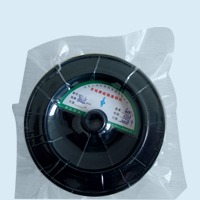
Material. Tungsten wire cuts fast but turns brittle and breaks easily after discharging, so it is rarely used. Molybdenum wire has a lower melting point and only average tensile strength, but its toughness resists breakage under rapid heating and cooling — which is why it is the mainstream electrode wire.
Feed speed. Higher wire speed improves flushing, but it shortens run time per reel, increases reversals and raises non-cutting time, so effective cutting speed falls. Match wire speed to workpiece thickness and flushing needs.
4. Tension Control
- Too little tension: discharge and flushing forces make the wire wander, causing barrel shapes, line marks, collapsed corners and short circuits.
- Too much tension: discharge erosion thins and embrittles the wire, leading to breakage.
Set moderate tension according to the machine and workpiece, buy molybdenum wire from established manufacturers, and keep the wire feeding system in good condition.
Selection tip: define the workpiece accuracy, dimensions and material first, then pick the matching diameter range. When unsure, follow the standard configuration of similar machines or adjust based on breakage rate and surface quality in test cuts.
Need more information? — we reply within 24 hours. Contact our sales team