
Cabinet parameter settings directly affect wire consumption and cutting speed. Poor settings can cause wire breakage after only 20–30 hours of cutting. The following approach balances wire life and efficiency.
1. Common adjustment approach.
- Widen the pulse and raise the voltage for low workpieces to boost discharge efficiency.
- Control the current (e.g. 3.5–4A, depending on the amplifier transistors and workpiece). Excessive current accelerates wire wear.
- Add amplifier transistors (e.g. five) when cutting height exceeds 400mm to maintain power.
- Set pulse width and interval sensibly (e.g. combinations such as 128, 4, 32) so flushing and deionization are adequate.
- Slow the feed slightly to reduce short circuits and impact, lowering breakage risk.
- Mix the fluid slightly richer to improve lubrication and flushing and protect the wire.
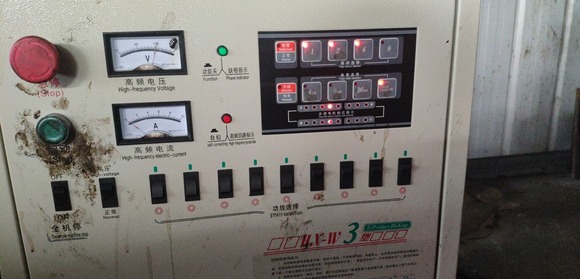 2. Reading the parameter table.
Parameter meanings vary by brand; the cabinet manual is usually available online. In one common MS-WEDM cabinet:
2. Reading the parameter table.
Parameter meanings vary by brand; the cabinet manual is usually available online. In one common MS-WEDM cabinet:
- Pulse width is coded by number: 0 = 2µs, 1 = 4µs, through 14 = 90µs and 15 = 99µs — a range of roughly 1–99µs.
- Pulse interval ratio: adjustable 1–15.
- Amplifier transistors: adjustable 1–15.
Only by understanding these meanings can operators set parameters for their own workpieces instead of copying others blindly.
3. Practical advice.
- Read the cabinet manual first to learn each parameter’s meaning and adjustment range.
- Set parameters by workpiece height, material and precision: tall workpieces need more transistors and longer intervals for flushing.
- Monitor actual current with the ammeter and find the point where efficiency is adequate and wire wear is controlled.
- Record effective parameter sets for different jobs to build a personal process database.
- When breakage is frequent, check parameters and wire wear first rather than simply installing new wire.
In short: the balance between wire life and speed lies in parameter details. Understanding parameter meanings and adjusting transistors, pulse width and interval and feed rate — together with fluid concentration — is the key.
Need more information? — we reply within 24 hours. Contact our sales team