
Cutting cast iron on wire EDM frustrates many shops. The root cause lies in the material and its casting process: castings — whether pit-molded or resin-sand cast — contain sand, nails and other impurities plus porosity that seriously disrupt the cut.
1. Two Reasons Cast Iron Is Hard to Cut
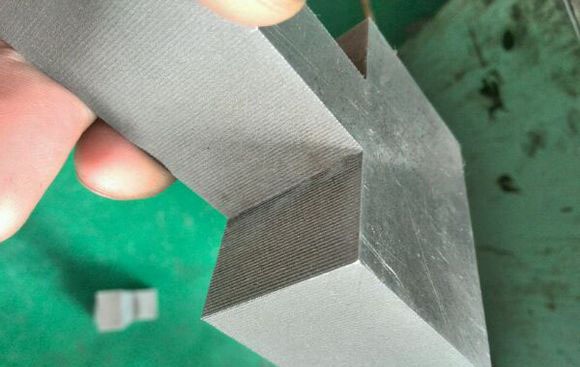
- Impurities: non-conductive material such as sand and embedded iron can cause short circuits and stop machining entirely.
- Porosity: gas pockets inside the casting cause repeated short-circuit retraction.
2. Treating Porosity Differently From Impurities
Porosity usually means the machine retracts again and again on short circuit. Adjust the tracking setting so the machine backs off a few steps on a short-circuit alarm and then resumes automatically — this typically lets the cut get through.
Non-conductive inclusions such as sand usually mean the job cannot be completed. Re-plan the tool path or scrap the material. Large inclusions often cannot be cut around, and even if the wire gets through, the cut surface is badly damaged.
3. Electrical and Operating Adjustments
Cast iron has high carbon content, so machining can be tuned as follows:
- Increase pulse width for stronger discharge.
- Reduce current to avoid aggravating short circuits.
- Slow the cutting speed.
- Dilute the dielectric and reduce tracking — normal cast iron cuts fine as long as no large non-conductive inclusions are present.
- If necessary, switch off the flushing and cut “dry”.
- Where an inclusion is met, turn off the machining switch and let the machine discharge in air until the current meter drops, then turn the switch back on.
Note: the widely shared tip of adding dishwashing detergent does not help with cast iron — the problem is the material itself, not the dielectric.
4. Surface Condition and Quoting Considerations
- Die-cast surfaces are typically rust, oxide and other contaminants; cutting them directly results in non-conductive failure. Machine them first.
- Cast iron wire EDM work is usually a secondary operation on a machined part, or trimming of burrs on the base and entry faces of a raw casting.
- Explain the risks before accepting a job: the cut surface may be poor, and a large inclusion can make the job impossible. Setting expectations avoids disputes with the customer.
Summary: The key to cast iron is recognizing the type of defect, adjusting parameters, and stating the risks up front. Porosity can be passed with retraction; non-conductive inclusions require re-planning. “Wider pulse, lower current, slower feed” is the basic recipe.
Need more information? — we reply within 24 hours. Contact our sales team