
Many operators avoid cutting aluminum on wire EDM. It wears out conductive blocks quickly, cuts deep grooves, and the grooves readily pinch and break the molybdenum wire — sometimes so badly the trapped wire cannot be pulled free. Understanding the wear mechanism points to effective remedies.
1. Why Conductive Blocks Wear Fast on Aluminum
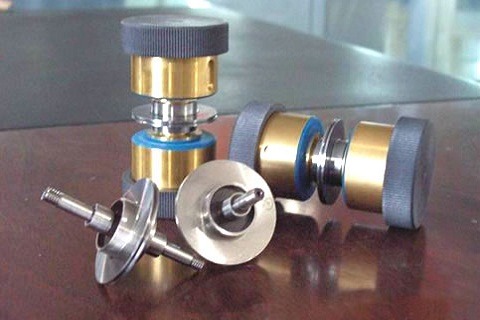
Alumina (Al₂O₃) grit. Cutting aluminum generates large amounts of aluminum oxide particles. These are extremely hard and abrasive, behaving like a lapping compound that quickly carves grooves where the wire meets the conductive block. Soft aluminum chips and hard grit pack into the groove; once wedged in, they jam the channel and snap the wire.
Spark erosion. Alumina between the wire and the conductive block intermittently conducts and insulates the moving pair, generating spark discharges that erode the block faster. This is a shared drawback of HS-WEDM machines that feed power through the conductive block.
Similar behavior appears when cutting conductive ceramics, silicon nitride or boron nitride.
2. Four Ways to Slow the Wear
1. Tune the pulse parameters. Wide pulse width and short pulse interval produce larger alumina particles that stick to the wire. Raising the open-circuit voltage, narrowing the pulse width and widening the pulse interval reduce particle adhesion.
2. Manage the dielectric fluid. Aluminum is usually cut with water-based dielectric, normally diluted 1:10 to 1:20; for aluminum the mix can be leaner, balancing efficiency and cost. Add a sponge filter to keep impurities out of the tank, maintain clean flow and reduce adhesion — and wash or replace the sponge regularly.
3. Use good operating technique. Put a sponge in the groove at the rear of the upper wire guide arm. The fast reciprocating wire rubs against the sponge, damping wire vibration so the power supply performs properly.
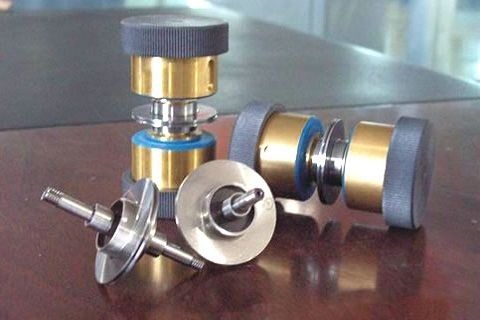
4. Install an aluminum-cutting device. The principle is simple: two carbon brushes plus a conductor connecting them. After wiring the conductive block feed to the device terminal, current comes from the device and the block stops carrying current. Mounting is straightforward — fix the unit to the left base of the wire spool with two tapped holes for easy installation and removal. The carbon brushes are reported to last about two years, essentially eliminating aluminum-related block damage.
3. Other Ways to Reduce Wear
- Use a denser material for the conductive block
- Add a rubber scraper between the block and the guide wheel
- Use cleaner dielectric fluid
- Rotate the block surface more often
- Use narrow pulse width with wide intervals to reduce re-adhesion
Each helps only modestly, but they can be combined to suit actual working conditions.
The root cause of block damage when cutting aluminum is the double action of alumina grit and spark erosion. Parameter optimization, fluid management, operating technique and the aluminum-cutting device together markedly slow wear and reduce wire breakage and frequent block rotation.
Need more information? — we reply within 24 hours. Contact our sales team