
Adjusting the servo tracking speed on a wire EDM machine does not increase cutting speed. Its real job is to keep the discharge stable. The discharge gap is only about 0.01 mm, and consistent discharge depends on holding the right gap — a state called “good tracking.” When tracking is wrong, the machine may stall, cut poorly, short out, or even burn through the molybdenum wire, and in severe cases the workpiece is ruined.
1. Under-tracking vs over-tracking
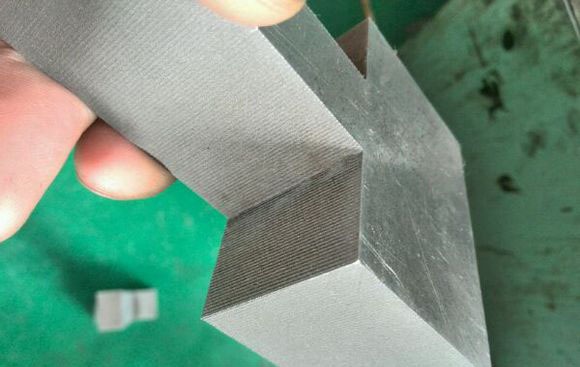
- Over-tracking: The discharge gap gradually closes because the feed moves faster than the wire can cut. The gap disappears entirely, the machine short-circuits, and cutting stops.
- Under-tracking: The discharge gap gradually widens because the feed lags behind the cutting rate. Cutting becomes unstable, shown as an unsteady current and uneven stepper-motor steps. Mild under-tracking leaves mottled marks on the workpiece but the cut continues; severe under-tracking burns and snaps the wire.
2. Two rules for setting tracking speed
Rule 1 — aim for about 80% of the short-circuit current.
Turn on the high-frequency power and hand-crank the molybdenum wire against the workpiece until no sparks appear (the short-circuit point). The current shown at that point is the short-circuit value. The best cutting current is roughly 80% of it — a useful reference for judging whether the feed setting is right.
Rule 2 — watch the ammeter needle.
During normal cutting the needle should stay nearly still:
- Frequent downward swings mean under-tracking; increase the tracking speed.
- Frequent upward swings mean the machine is shorting (over-tracking); reduce the tracking speed.
- Wide back-and-forth swings mean unstable cutting. Identify the cause and adjust related parameters — pulse energy, dielectric flow, and the condition of the wire feeding system including guide wheels and bearings — before continuing, otherwise the wire is likely to break.

3. Adjustment tips
- The goal of tracking adjustment is a stable ammeter needle; this is the most visible sign of stable cutting.
- Make small changes and observe the result. Large jumps can destabilize the cut.
- Treat tracking problems together with electrical parameters, dielectric fluid, and the wire feeding system — poor tracking is usually combined with other factors.
Summary: Tracking adjustment is essentially about keeping the discharge gap stable. Set the baseline with the 80% short-circuit current rule, judge the state from the ammeter needle, and stable tracking will keep the cut stable.
Need more information? — we reply within 24 hours. Contact our sales team