
Molybdenum wire wear is a central item in wire EDM cost control: low wear keeps costs down and margins up, while high wear raises costs and brings the risk of wire breakage. Excessive wear usually comes from one of four areas — the wire feeding system, electrical parameters, workpiece material or the dielectric fluid — and the high-frequency electrical parameters and dielectric quality are the most direct influences.
1. Wire Feeding System
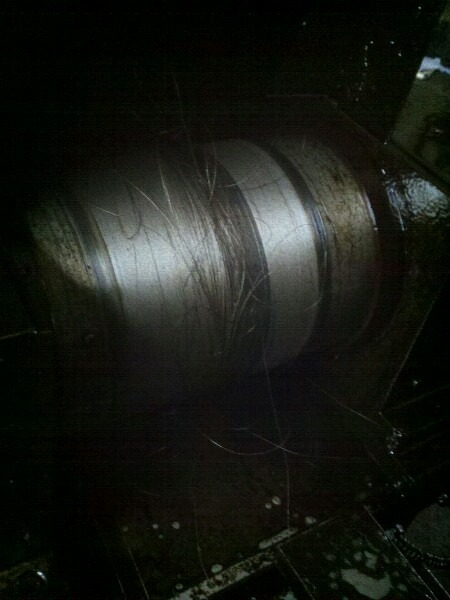
- Check whether the guide wheels wobble and whether the wire wanders during travel.
- Check the conductive blocks and guide wheels for grooves worn into them.
- Check the wire spool for piling or overlapping wraps.
Faults in the wire feeding system subject the wire to extra friction and wear. Replace worn parts promptly and keep guide wheels and guide rails clean.
2. Electrical Parameters
- High-frequency power: running power too high accelerates wire wear through large currents and high power.
- Pulse width and interval: match them to workpiece thickness and material. Poor combinations (such as excessive peak current) noticeably increase wear.
- Waveform quality: a dirty discharge waveform (not a clean sinusoidal form) lowers discharge efficiency and worsens wear. In most cases, excessive wire wear is caused by the high-frequency system, not the machine mechanics — a better power supply and control system usually fixes it.
3. Workpiece Material and Internal Stress
- Materials such as copper, aluminum alloys and tungsten steel are hard to cut and cause relatively high wire wear.
- Excessive internal stress in the workpiece distorts it during cutting and increases wear. Improve the tempering process to lower residual stress, or add process holes to release it before cutting.
4. Dielectric Fluid
The dielectric is one of the most direct factors in wire wear:
- Check that the upper and lower flushing lines flow freely and are not blocked.
- A poor dielectric with weak lubrication directly increases wire wear.
- Water-based dielectrics lubricate better and flush more easily, noticeably reducing wear.
Concentration note: when a water-based dielectric is too dilute, conductivity rises; reaching the same cutting efficiency then requires more current, and higher current means more wire wear — sometimes showing up as wire breakage. If wear or breakage rises, check fluid concentration first, top up the working fluid, then look at other factors.
Suggested order: check dielectric concentration and condition first, then high-frequency parameters, then the wire feeding system, and finally workpiece material and internal stress. Working through this sequence quickly isolates most excessive-wear problems.
Need more information? — we reply within 24 hours. Contact our sales team