
A water-based dielectric provides cooling, rust prevention, lubrication, and cleaning, along with adequate dielectric strength, arc suppression, and breakage protection, and it is safe and non-toxic. Choosing a fluid suited to the machine and using it correctly brings better surface finish and cutting efficiency and extends machine life.
1. Dilution ratios
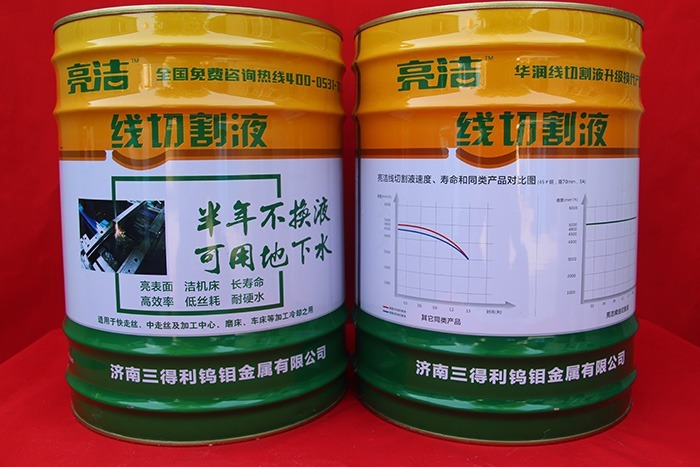
- Tap water or pure water: the standard ratio is 1:10 to 1:20.
- Hard water such as well water: use 1:10, with a formula rated for hard water.
- Medium-speed wire EDM (MS-WEDM): 1:10 works; pure water gives the best result.
Water quality note. Standard wire EDM fluid is best mixed with pure water or tap water. High calcium and magnesium levels in well water cause layered workpiece defects, slower cutting, and shorter fluid life. An upgraded formula made for hard water (a 1:10 well-water mix) avoids these problems entirely.
2. Top-up timing and replacement
- When the fluid level gradually drops, top up promptly — always add concentrate and water in the correct ratio, never just water.
- If the fluid separates or develops a bad smell, check whether the product has expired and replace it.
- Eroded debris darkens the fluid during cutting — this is normal. With a special formulation, discoloration does not slow cutting, so there is no need to dump the whole tank; service life can exceed six months.
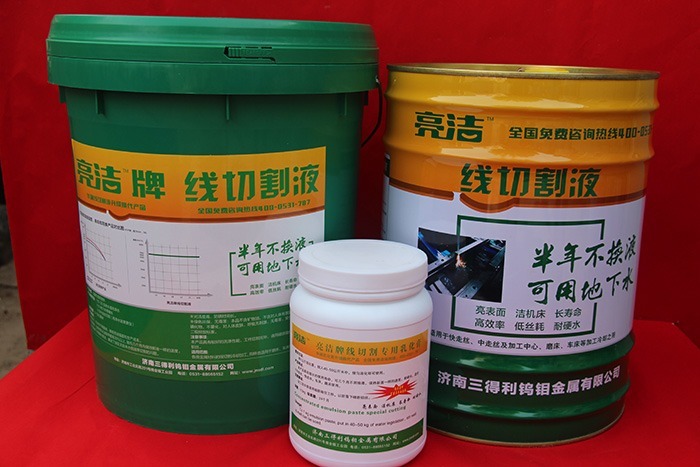
3. Using water-based paste concentrate
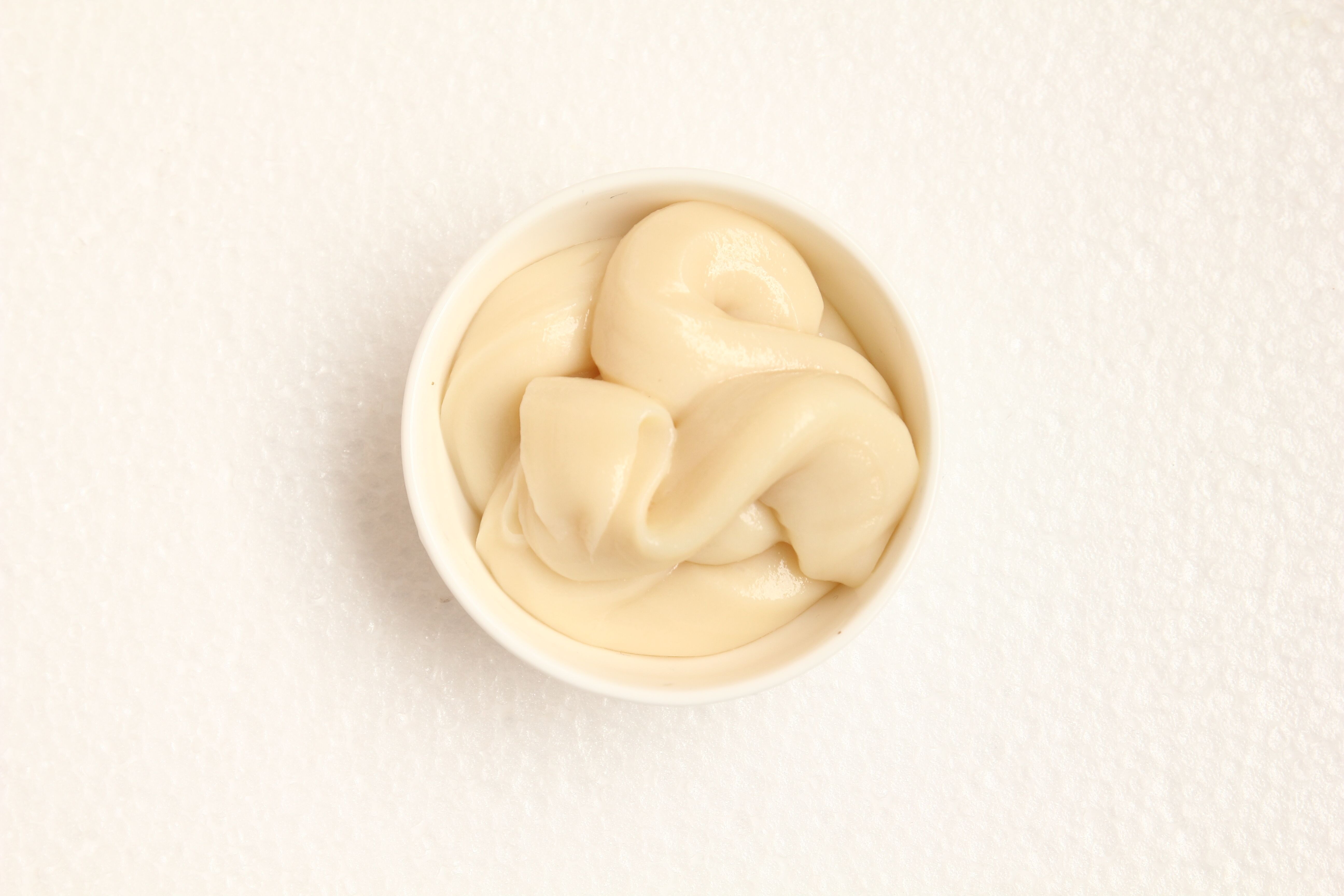
Paste concentrate offers excellent cleaning, penetration, arc suppression, and rust prevention. It produces bright, smooth cut surfaces with almost no reversal marks, low molybdenum wire wear, and a low breakage rate. It suits die steel up to 0–1000 mm thick and supports multiple passes.
- Ratio: 1:40 to 1:50, stirred into water until fully dissolved.
- Scope: MS-WEDM and high-speed wire EDM (HS-WEDM) machines, as well as lathes and grinders.
- Notes: a little water occasionally separating from the yellow paste is normal — stir before use. Do not mix it with soluble oil, which degrades cleaning performance. When topping up, add paste and water in ratio. After cutting, hold the finished part with a magnet so it cannot drop and snap the wire.
4. Basic requirements for a wire EDM working fluid
- Handle 3A–10A cutting current without shorting.
- Provide effective flushing: small currents should cut thick workpieces, carry molten particles out of the kerf, and quickly restore insulation strength.
- Compress the discharge channel so energy concentrates for very thick workpieces.
- Clean and lubricate well, improving finish and speed while leaving the workpiece in natural metal color.
- Stay stable with proper insulation strength, reducing pulse energy loss and electrode wire wear.
- Be non-polluting, harmless to operators, and non-corrosive to workpieces.
- Mix easily, be readily available, reasonably priced, and long-lasting.
Practical note: groundwater mineral content varies by region. Observe the fluid regularly and replace it at the right time. Selecting and using a water-based dielectric correctly gives the best balance of quality, cost, and environmental performance.
Need more information? — we reply within 24 hours. Contact our sales team