
Cutting steel over 200 mm is hard for a wire EDM machine, and not just a matter of how high the wire guide arm can rise. Maximum thickness is governed by discharge erosion conditions: beyond a certain depth the process turns unstable, ends in short circuit with current but no discharge, and soon breaks the wire while grooving the cut face.
1. Five Contradictions of Thick Cutting
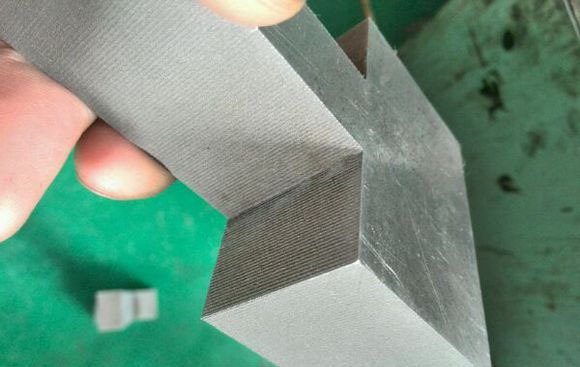
- The fluid cannot get in. Without enough water entering, debris is not removed, the gap never recovers insulation, and no discharge forms.
- Impurities shunt the energy. Material packed in the gap acts as a resistor shunting the pulse source, so the gap loses breakdown voltage and single-pulse energy, and cutting slows down.
- Wire current-carrying capacity limits power. With too much wire inside the workpiece, the wire’s own current rating prevents larger pulse energy from being delivered.
- The flushing path is too long. Debris in the middle of the kerf travels far to exit; the attenuated spark lacks the explosive force to clear it.
- Material factors. Thick stock is more likely to contain impurities and internal stress, raising the chance of kerf defects, deformation and short circuits.
Note. Materials with higher conductivity, thermal conductivity or melting point, such as copper, carbide, pure tungsten and pure molybdenum, cannot reach 200 mm; even 70 mm is already very difficult.
2. Core Parameter Principles
Pulse width is the discharge (cutting) time, pulse interval is the gap (flushing) time, and power is the discharge energy (current). The thick-cutting logic:
- Increase pulse width. The thicker the part, the more energy and time the high-frequency supply must deliver; without enough discharge time, metal will not melt. Use a pulse width of 32 or above.
- Increase pulse interval. The thicker the part, the harder it is to flush the swarf; enough interval time lets the swarf ride the flow out and avoids short circuits. Use a pulse interval of 8 or above.
- Increase current moderately. About 2.5 A, under 3 A, on a standard cabinet. Excessively high current causes short circuits and wire breakage; a break means a costly restart.
- Increase power amplifier output. Raise the amplifier setting, for example select five tubes.
- Slow the feed. Too fast a step rate causes constant retraction.
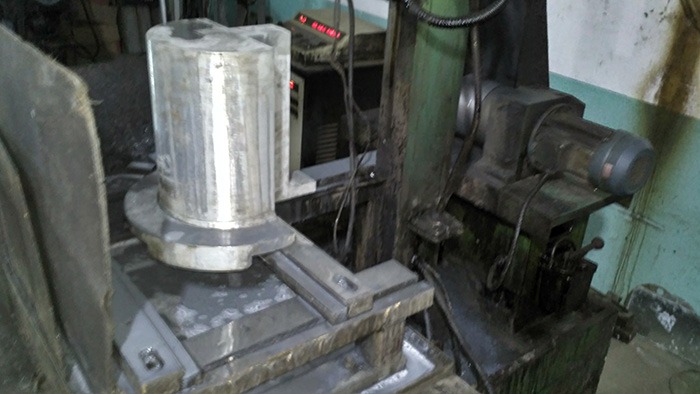
3. Practical Steps for 200–300 mm Workpieces
- Install a fresh molybdenum wire. A wire that has cut for days is likely to break mid-job on a thick part; put on a new spool first.
- Replace the working fluid. Use a water-based dielectric with stronger flushing action; for tall workpieces it gives better debris removal, cooling and speed.
- Check the fluid circuit. Confirm the upper and lower outlets both deliver water and the lines are clear.
- Check wire tension. A loose wire spans a longer distance, vibrates more, wears against the cut face and finally breaks mid-job.
- Parameter package. Raise voltage, pulse interval and pulse width substantially, slow the feed, increase amplifier output, and hold current at 2.5–3 A.
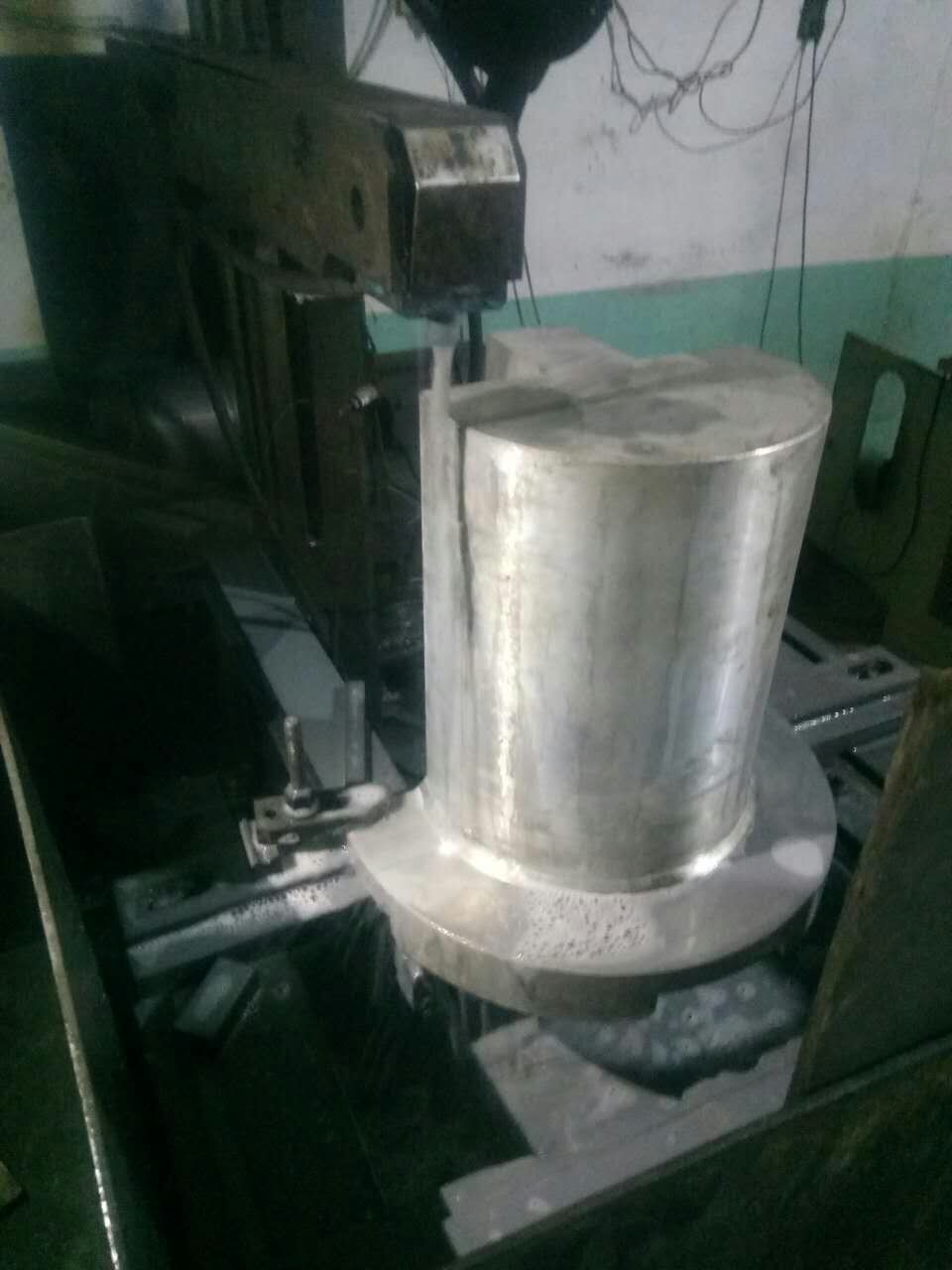
4. Advanced Measures for Thick Cutting
- Increase single-pulse energy (voltage × current × pulse width) while widening the pulse interval, for stronger discharge without raising average wire current.
- Choose a dielectric with higher dielectric constant, faster insulation recovery, and stronger flow and ejection ability.
- Raise the pulse voltage substantially to widen the discharge gap so the fluid enters and exits more easily.
- Pre-treat the material: forge repeatedly for a uniform structure, anneal and age to remove internal stress, and remove generous allowance to release stress.
- Increase wire speed with smoother feeding to strengthen water-carrying and short-circuit resistance.
- Use an intentionally biased step feed or an automatic “advance two, retract one” feed to widen the gap effectively.
Summary. Thick cutting is fundamentally about solving three problems: fluid cannot enter, swarf cannot exit, and energy is insufficient. Following the parameter logic of large pulse width, large pulse interval, moderate current, high amplifier output and slow feed, together with fresh wire and fluid and a clean, well-tensioned setup, keeps thick workpieces cutting stably.
Need more information? — we reply within 24 hours. Contact our sales team